Showing posts with label korea house. Show all posts

Thursday, November 10, 2011

Cinnamon, Ginger, Peppercorns, and Persimmons make Mo Ju (모주) a fantastic d


We had just finished a savory lunch at Korea House in Jeonju when we were offered this high quality Mo Ju (모주).

The taste was fruit balanced with honey, with the body of coffee and the flavor complexity of chai. The honey provided a solid taste throughout. The cinnamon was strong, but not overpowering.

It's typically served as a dessert beverage as it was here. Cinnamon has medicinal properties but this is generally an epicurian fare.

Our bellies were thoroughly satisfied after this sweet treat and few moments are better than those moments when you've just had a really special treat.

- Greg

Thursday, November 3, 2011

Jeonju's Most Famous Bimbimbap Restaurant: A Real Human Touch from the Daughter of it's Inventor

Before arriving in Korea, I knew that my orientation would be in Jeonju and one of the first things you'll find when learning about Jeonju is that it is known for the beloved Korean dish called bibimbap. At its simplest, "bibim" means mixed in Korean and "bap" means rice and without further elaboration, that is exactly what the dish is. Or it is, at least, what the dish once was.

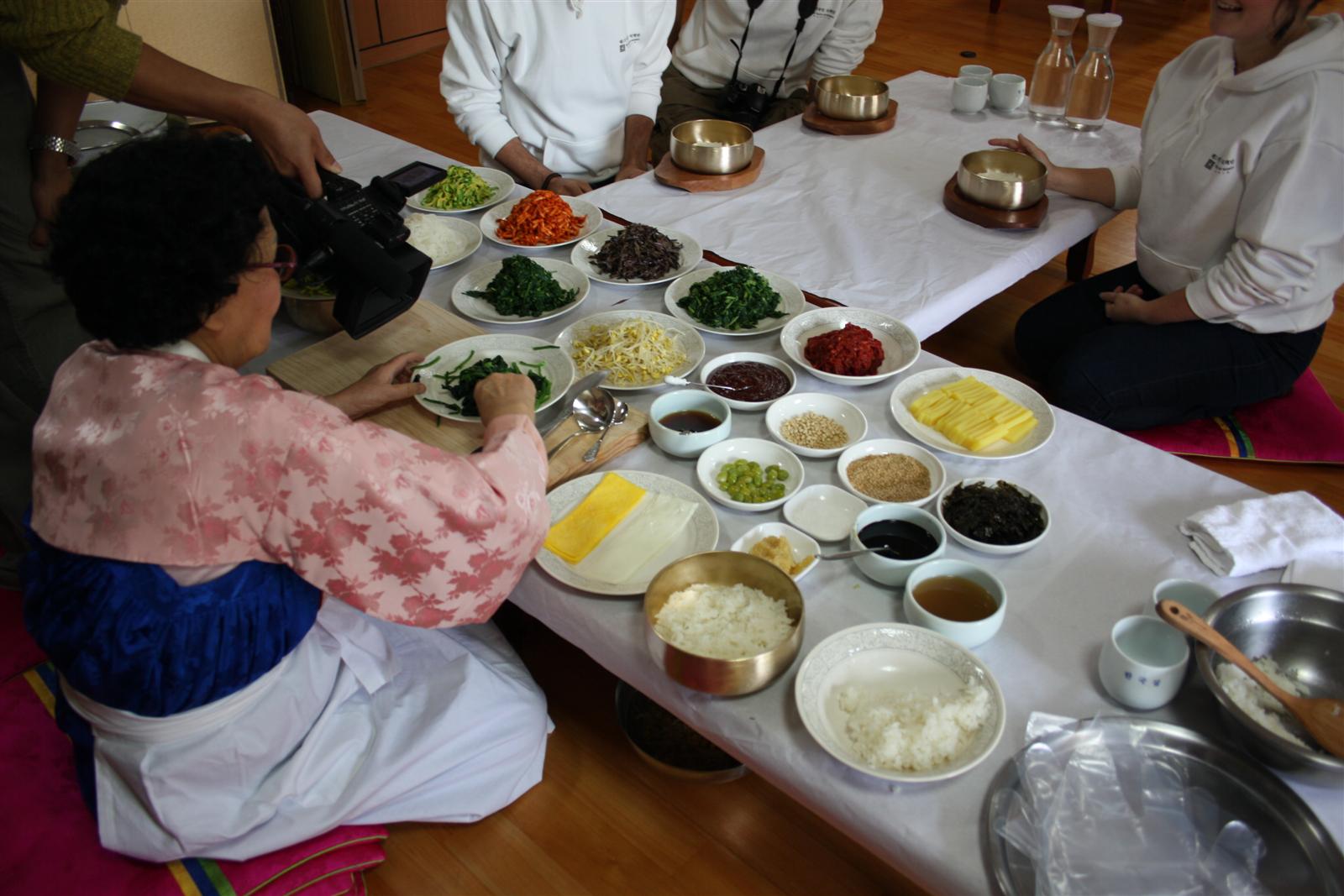
In the town of Jeonju, however, bibimbap became something royal. At the Korea House restaurant in Jeonju during the first meal of our Hansik Korean Traditional Food Tour for Foreign Foodies, we met the daughter and grand-daughter of the woman who took a practical rice dish that incorporated whatever available or leftover ingredients or side dishes and made it into a timeless and beloved piece of art. As the foremost heir of this woman's legacy, her now senior daughter pridefully took me and my fellow team members through the thoughtful steps of ingredient selection, preparation and assembly. After making our way through the modern front restaurant, through the courtyard with its peaceful garden and small fish ponds, and a more ceremonial dining room, we gazed upon a vast rainbow of traditional bibimbap ingredients. Our assembly began with a gentle hand washing. So much of Korean traditional foods are hands-on dishes and bibimbap is no exception whether massaging of seasonings and ingredients or carefully laying ingredients over the top of the rice.

After first washing our hands, we were pointed to the key flavor foundations of the dish. This restaurant makes its own aged soy sauce. After being allowed a small pinky-dipped taste of the syrupy, dark liquid, all our faces changed in wonder. None of us had ever tasted a soy sauce so fine, so flavorful and full of rich umami flavor. Cheap commercial soy sauce is more like salty water than a flavor contributor. I recall foreign friends in college really craving quality soy sauce in the peak of their homesickness. But this artisinal soy sauce, along with house-made beef broth, minced garlic and fine sesame oil were key in seasoning each of the whole ingredients. I say "whole" because it is important. Whole, unprocessed ingredients are what I consider the heart of healthy eating. Chosing whole, unprocessed foods is, in my opinion, the single, most important act anyone seeking a healthy lifestyle could do. This one act automatically and positively influences a whole host of other healthy choices. But perhaps more encouraging is that bibimbap also proves that whole, quality, slow food is often supremely delicious.

With pride, my fellow members and I got to work each crafting our own bowl of beautiful, edible art. Depending on our personal preferences, dietary needs, and creative impulses we added any of the prepared ingredients to our bowls of deliberately firm-cooked rice: spinach, bean sprouts, carrot, raw beef, fern bracken, edible chrysanthemum leaves, julienned egg white and yolk, pine nuts, sesame seeds, gingko nuts, vibrant yellow mung bean jelly, shredded dried laver, bellflower root, radish, shiitake mushroom, hot pepper paste and toasted sesame oil.

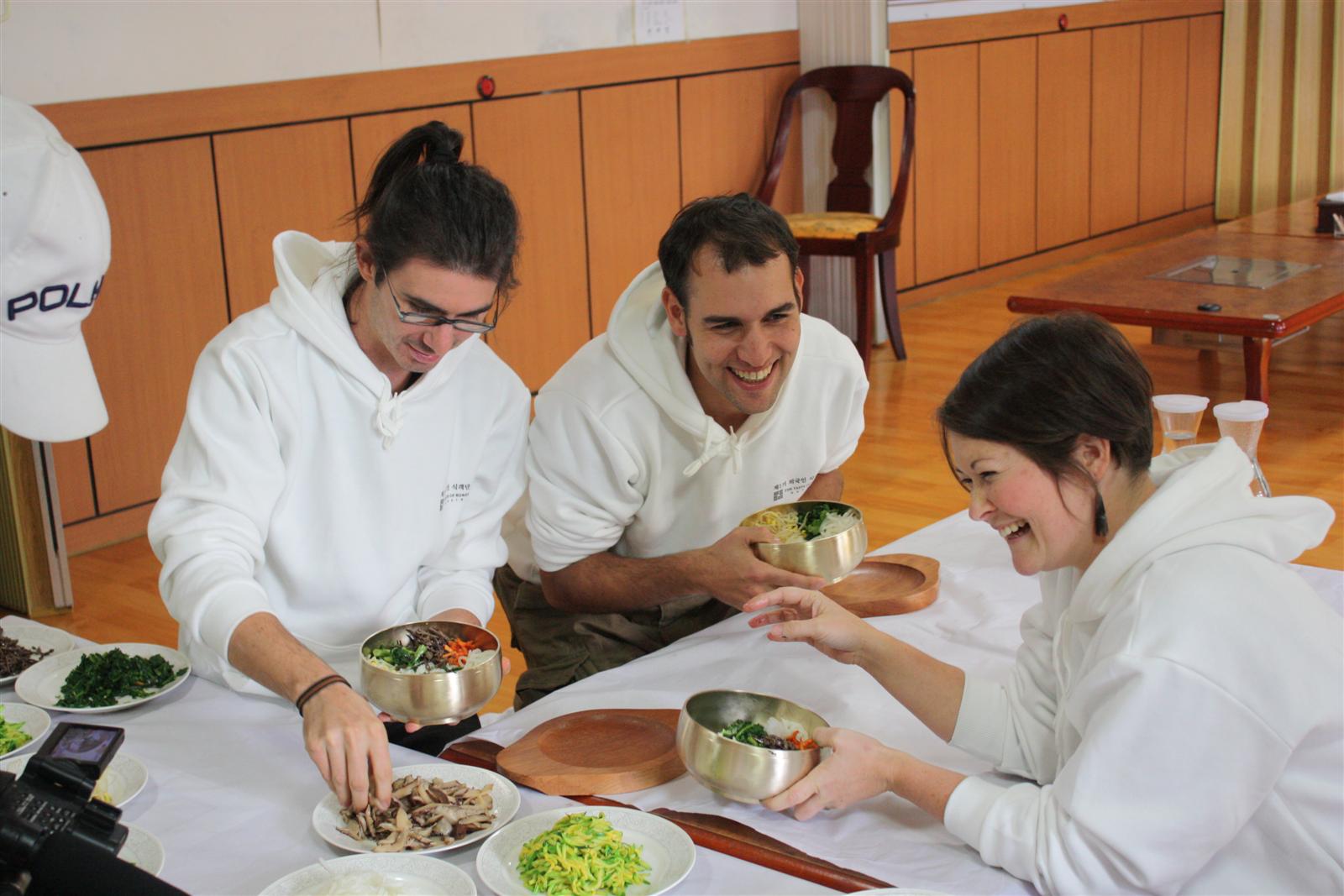
I'm not sure that any dish in Korea blends tradition and contemporary as well as bibimbap. Flanked by a delicious array of house-prepared sides, we admired this dish that had first been introduced more than 200 years ago but which now satisfies fans of Korean food all over the world. But despite its historic roots and modern fame, the dish before us was also uniquely ours. Thoroughly combined into one dynamic dish, mine bowl sung the fresh flavor of extra chrysanthemum leaves. Team-member Mike's took a vegetarian route and was fragrant with rich sesame while Greg's manifested as a hearty bowl of extra spice and beef. By its very nature, the royal Jeonju version of this dish requires human touch and by that human touch it is subject to the current whim of its maker and to the availability of fresh, quality seasonal ingredients.
I feel very blessed to have had this experience at Korea House as part of our Hansik Tour. Bibimbap was my first Korean food crush and because it doesn't have a precise recipe, it frees me to customize it to my mood and the seasons and, thus, to never tire of it. If you haven't yet tried Korean food, bibimbap might just be your "gateway drug." Once you get a sense of Korean's simple approach to big, bold and sexy flavors, you might just join the world of fans in our love for this dish that never gets old.

Our teacher and daughter of the royal version creator shows us ingredient preparation.

Slow food is community building-- it is real experiences and memory-making. :)

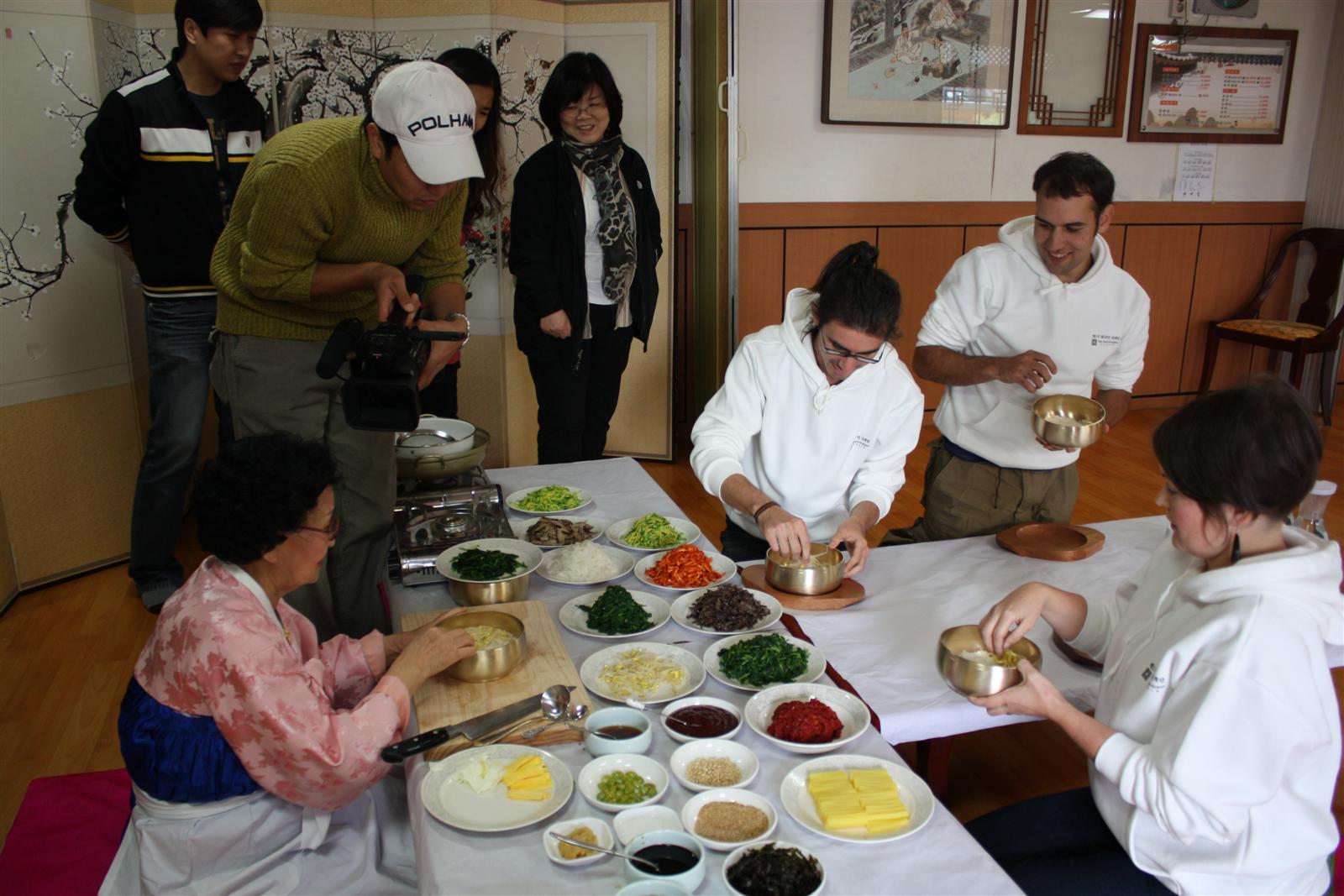
Assembly begins while our production crew looks on.

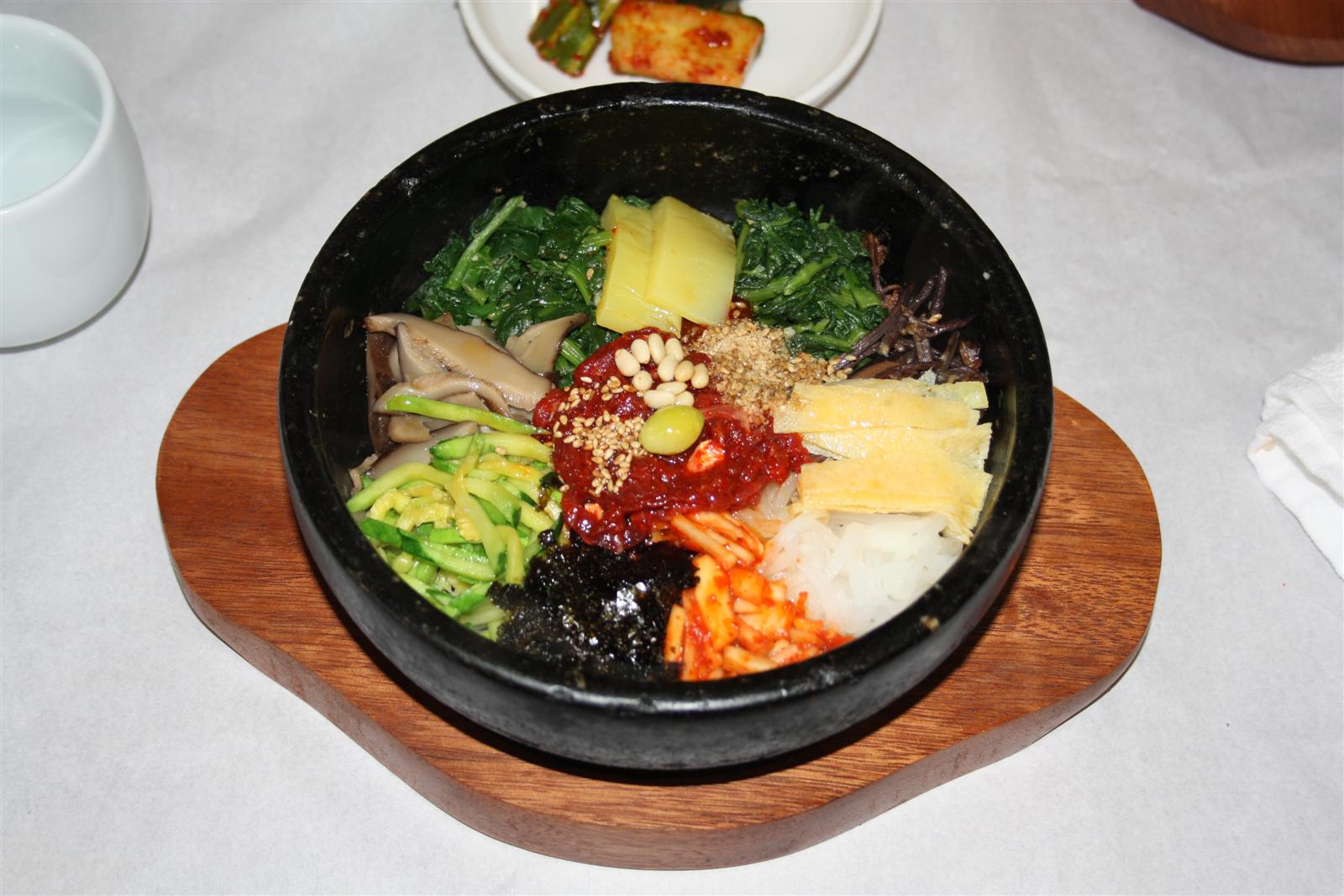
Korea House provided us with a tasty display of the hot-pot version (which we also devoured!)

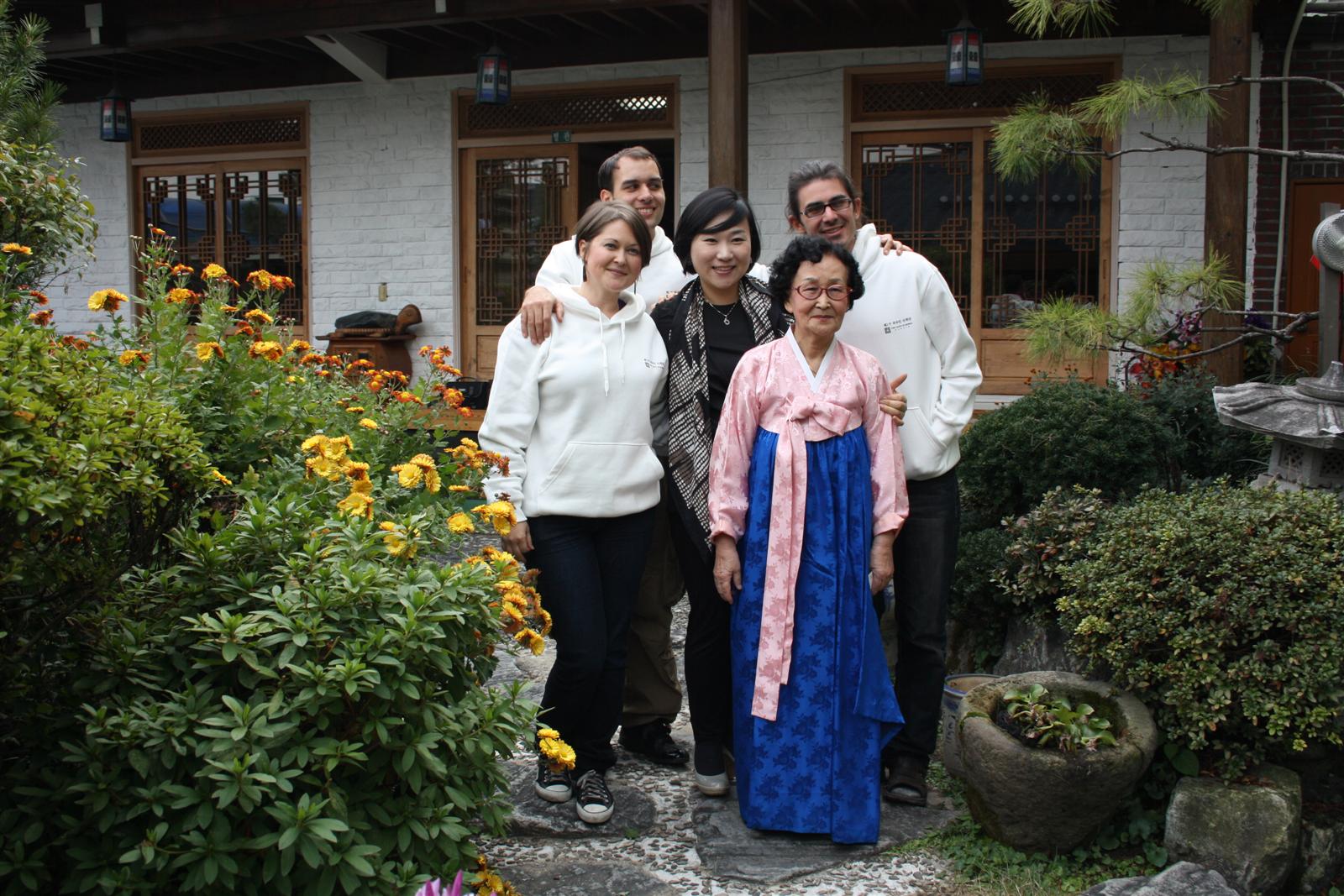
Three of our Happy Bear team members with daughter and grand-daughter of the creator.
Lovely restaurant, thank you for your hospitality!!


-Tanya

Korea House offers two choices of bimbimpap and many delicious sides with it. Please check the link in the article for directions and a map.

Wednesday, November 2, 2011

Bibimbap: Veg Heaven

Whenever I tell Koreans that I'm a veg*an, they generally ask the same question: what do you eat? Most of them don't seem to realize that Korean cuisine is full of awesome vegetarian goodies: pancakes made with green onions, chives, kimchi, potatoes, or lentils; noodles hot, cold, creamy, or spicy; all kinds of soups porridges; tofu in various guises. Then, of course, there's also 정식, or Jeongsik, or Table d'hôte, or the "set meal." No matter what you call it, it means rice, soup, and anywhere from, say, five to thirty-five side dishes, almost all of them veg-friendly.

However, the king of Korean vegetarian fare is, without question, Bibimbap (literally, mixed rice). Normally, I wouldn't take it upon myself to write about it, given that it's probably the simplest, most well-known, and most widely-diffused Korean food out there, with the possible exception of LA Kalbi. Thanks to Hansik, though, I recently underwent the most extreme and regal Bibimbap experience of my life, at Korea House in Jeonju.


Bibimbap with a master. This Granny (a term of respect in Korean) has been making Bibimbap for 52 years and claims that her mother invented it, or at least the high-class version.

Your standard Bibimbap - even the one I ate on the airplane on the way over here nearly five years ago, which, incidentally, was the first Korean food I ever tried - is vegetable heaven. Julienned vegetables like sauteed radish, carrot, and bracken, along with steamed and seasoned spinach, some bean sprouts, and a bit of roasted seaweed sit atop a bed of rice. Throw an egg on top if you'd like, drop on a dollop of red pepper paste, and stir it all up. Voila: a natural, low-maintenance, delicious vegetarian meal. At a cheap restaurant, this will run you about 3 dollars; at a fancy one, closer to 6.

For Kings, or, in this case, a bunch of vagabond foodies, Bibimbap can really be scaled up. Check out our table above: everything I just mentioned, plus sweet and spicy balloon flower root (it's OK if you have no clue what this is), sauteed zucchini, sautéed shiitake mushrooms, thin-sliced egg, mung bean jelly, ginko nuts, pine nuts, crushed sesame seeds, and a special broth made right there at the restaurant.


Some of the high-class toppings


Listening attentively to half a century of wisdom.

Being that everything will eventually get all stirred together, you'd think you could just throw in all the ingredients any which way. It's not so, though! The master insisted that we put each ingredient in its own place, paying particular attention to color symmetry. White radish slices and bean sprouts should be on opposite sides for optimal aesthetic appeal; sauces and nuts at the end to give it that just-completed look.


Me, Greg, and Tanya enjoying the lesson. Unfortunately (for them) Andy and Anina had not yet joined the festivities.


Can you believe I made that?

It turns out that even mixing it requires a particular technique. In addition to stirring everything up and mixing it evenly, one has to be sure to smush it together just so, in order that the perfect balance of soy sauce, sesame oil, and pepper paste will be mashed in to each grain of rice.


I got a little help from the boss on this one. Oh my god was it good.

It turns out, then, that Bibimbap has a fairly unique quality: no matter who puts the dish together for you, the final result is the outcome of your own skill. Even if you go all the way to Jeonju, search out the "Hangukjib," (the name of this restaurant) and order the most deluxe bibimbap on the menu, it's up to you to make it or break it! I see a little something symbolic in this: money can't buy you the best bibimbap; only familiarity can. Good food calls for good cooks, but also for good eaters, eaters who know something about the story and the theory of their food. Eating is consumptive, of course, but at its best, it's also participatory. More than many other places I've been, Koreans seem to be intent on holding on to this respectful, if not quite reciprocal, relationship between eater and eaten. Not as much as they should, given how many treasures their cuisine contains, but enough that just living and eating here as made me aware that people can, in fact, approach their food in different ways, some better than others. I owe many thanks to this Grandma in particular, and to others like her all around the country, for helping me learn how to really enjoy and appreciate food. Now, go get a bowl for yourself.


Me, Tanya, and Greg with two generations of Bibimbap Matriarchs.